Results About Careers Contact Law Enforcement Video Request
Virtual Client Sign-in Guard Client Sign-in Request a Free Security Assessment (519) 800-3947
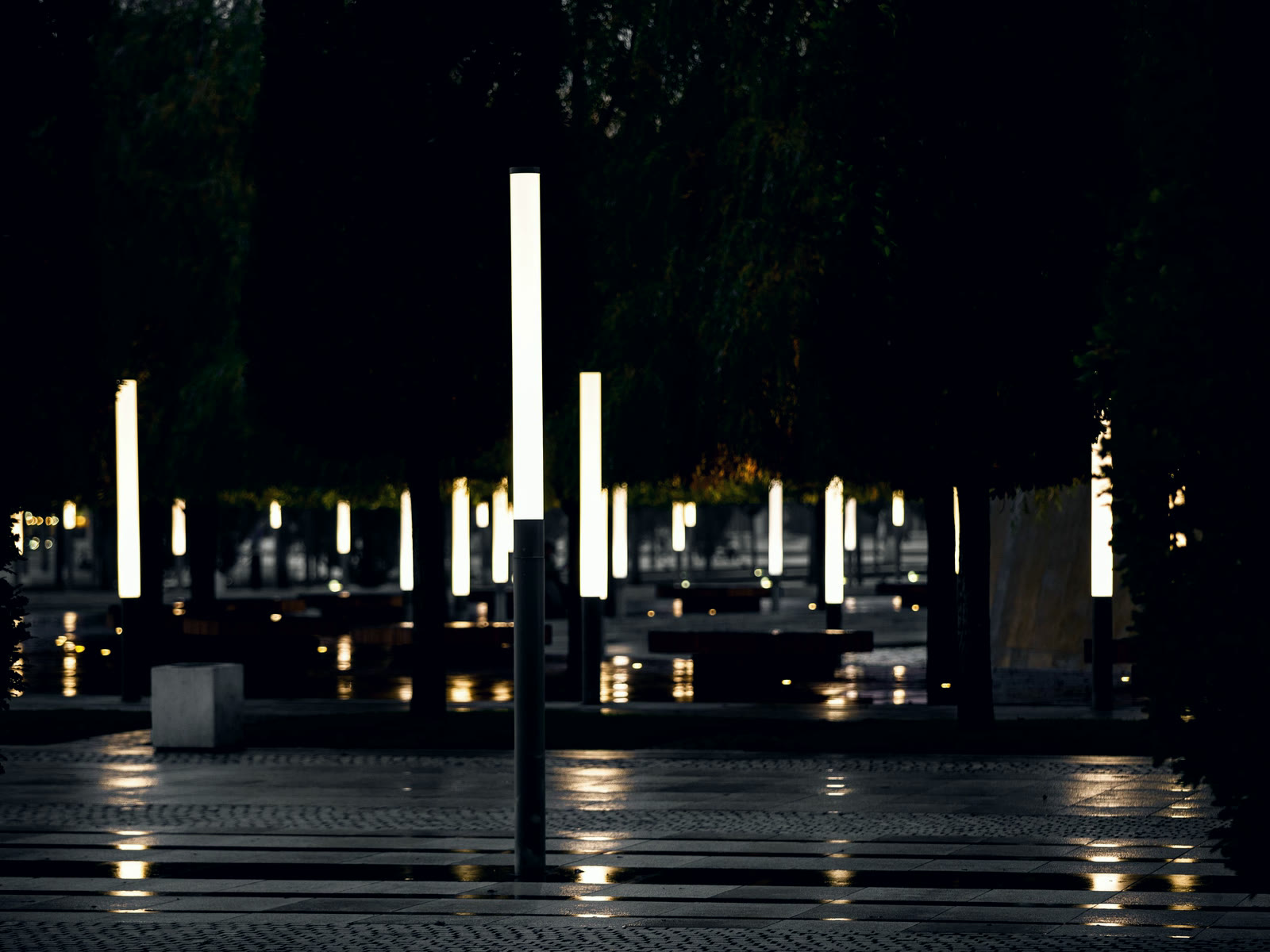
An empty public square at night, tall light columns reflected on wet paving
Municipal, BIA & Public Space

Public space that stays open,
and stays orderly.

Security for parks, civic buildings, transit hubs and business improvement areas. De-escalation-first officers lead, supported by towers, live monitoring and cameras, briefed on the site and documented every shift.

What the numbers say

Vandalism is the bill
that arrives every year.

It is never the crime that makes the news, and it is the one a municipality pays for again and again. Both countries count it in the hundreds of thousands.

Canada · 2025

0down 5% on 2024

mischief incidents police recorded across Canada in 2025 — more than break and enter, motor vehicle theft and robbery put together.

Statistics Canada · 2025

0in Ontario

of those were in Ontario. The police-reported count does not separate public property from private.

Statistics Canada · table 35-10-0177-01

United States · 2025

0recorded offences

destruction, damage and vandalism offences recorded by NIBRS-reporting U.S. agencies in 2025.

FBI · NIBRS table 3

0parks & playgrounds

of the vandalism offences were recorded at parks and playgrounds, with 12,854 more at government and public buildings.

FBI · NIBRS table 18

Canadian counts exactly as printed in table 5 of Statistics Canada's Police-reported crime statistics in Canada, 2025 (22 July 2026); the Ontario figure from table 35-10-0177-01; comparison figures in the same table are 109,753 break and enter, 83,652 motor vehicle theft and 22,942 robbery. U.S. figures from the FBI's 2025 NIBRS tables via the Crime Data Explorer (August 2026) — counts recorded by participating agencies, not national estimates. Damage nobody reports appears in neither column.

How it works

A presence that
walks the block.

Public space is covered by people first. This is a downtown block the way an ACS shift walks it — the route, the stops, and the places that get checked every pass, documented every shift.

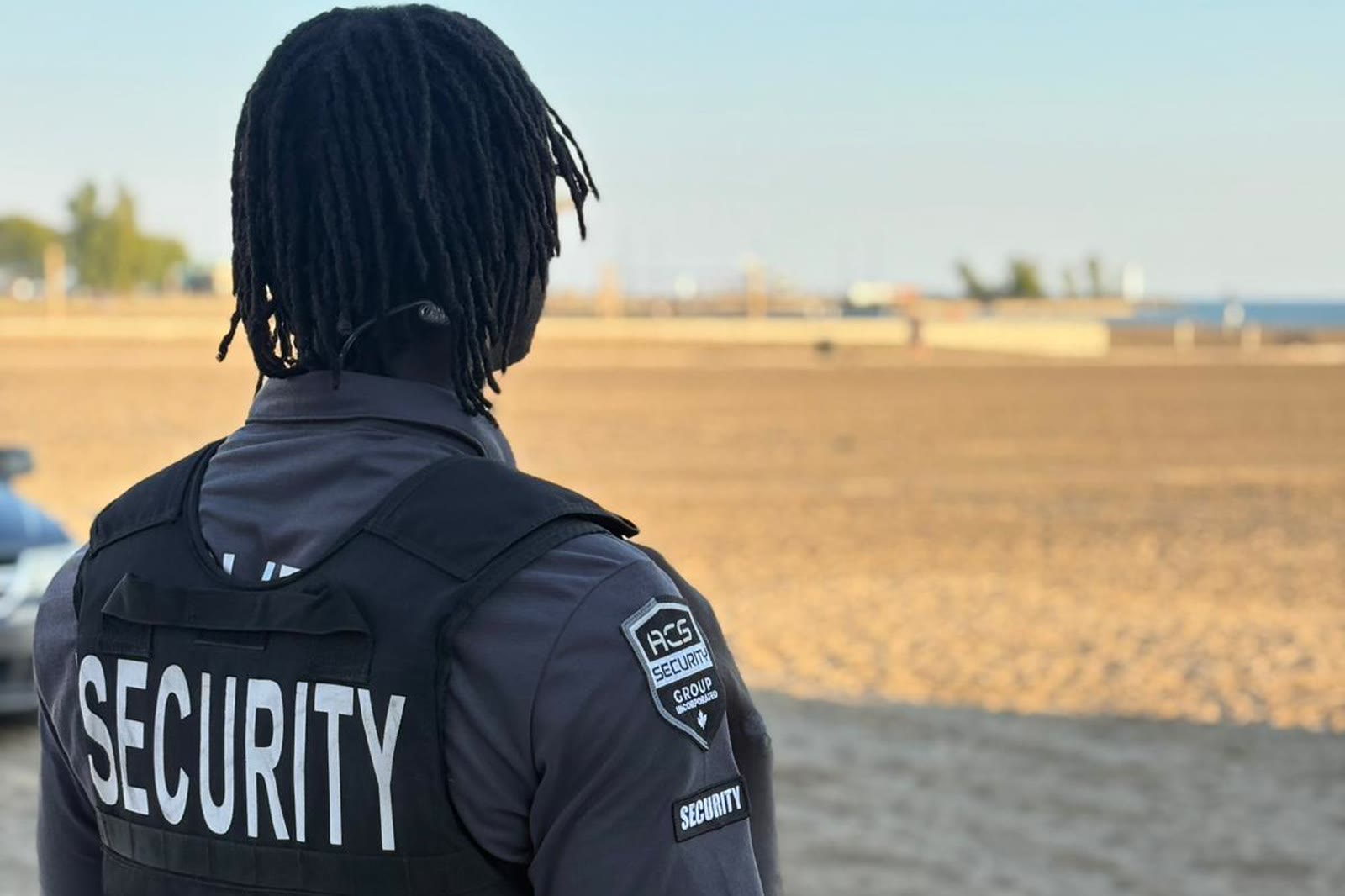
An ACS officer on foot patrol at a public waterfront in daylight
Licensed officer · public realm post
  1. Pre-shift

    Briefing, and what changed since yesterday

    The officer starts knowing which doorway was an issue last night, which bylaw complaint came in, and who the city has asked to be handled a particular way.

  2. Opening

    The round, in the same order every time

    Same route, same checkpoints, same order — so a gap in the log is visible, and so the people who use the space learn when to expect someone.

  3. On post

    Visible presence in the corridor

    Most of a municipal shift is standing where being seen does the work. Loitering, open drinking and aggressive panhandling move on before anyone has to be spoken to.

  4. Contact

    De-escalation first, every time

    The officer opens with a request, not an order, and gives the person room and time to take it. Nobody is touched, and nobody is moved on into a worse place.

  5. Referral

    Services before enforcement

    Where outreach, shelter intake or paramedics are the right answer, they are the call the officer makes. Police are for what is actually a crime.

  6. Close

    The log, filed the same night

    Times, locations, what was said, what was done. It goes to the city as a record they can use at a council meeting or in a grant application — not as a paragraph.
Officers are licensed under the Private Security and Investigative Services Act. What a municipal officer may and may not do is set by that Act, and the post orders are written to it.

What happens after the officer walks over

In the public realm,
removal is almost never the answer.

A municipal officer who treats every situation as an enforcement problem creates a bigger one, usually in front of a phone camera. This is the order the work is actually done in.

  1. Notice it early

    Most public-realm situations are visible for several minutes before they become a problem. An officer who is walking the space rather than parked in it sees the beginning, which is the part that can still be talked down.

  2. Open with a request

    A request, at a normal volume, with room to move away. No instruction that cannot be refused, and no position that leaves the person with nowhere to go. Most situations end at this rung.

  3. Offer the service, not the exit

    Outreach, shelter intake, a warming centre, paramedics. The officer carries the numbers and makes the call. Moving someone along without this is just moving the problem two blocks.

  4. Involve the business or the department

    A BIA member, a facility manager or a city department often has standing and history that an officer does not. Bringing them in is faster and sticks longer than anything the officer can do alone.

  5. Police, for what is actually a crime

    Assault, break-ins, weapons. The officer calls, holds the scene and hands over what was recorded. What a licensed officer may do is set by the Private Security and Investigative Services Act, and the post orders are written to it.

    Private Security and Investigative Services Act, 2005
  6. Write it down the same way every time

    Time, location, what was said, what was done, who was called. Consistency is what turns a season of shifts into something a council or a grant application can actually use.

What you get

What we put in the space,
and what each part is for.

Everything done in public space is done in front of people, and gets asked about afterwards. Here is what ACS puts where, and what each position is there to do.

On foot, in the open

Security Guard Services

De-escalation-first officers who are approachable in daylight and still there when the block quiets down.

Over a park, a lot or a block

Mobile Defense Towers

Elevated cameras with light and audio where there is no building to mount on, moved as the problem moves.

Overnight, from the operations centre

Virtual Security Guard

Operators watch a closed facility and speak to people on it, without anyone being sent into a confrontation.

Festivals, markets and civic events

Event Security

Licensed event staff for entry, crowd flow and egress, briefed on the site before the first guest arrives.

Every shift is documented, because a complaint, a claim and a council question all end at the same place — see what an assessment covers

The equipment

Everything here is meant to be seen.

Public space is watched differently. Equipment supports the officers rather than replacing them, and everything is placed so residents can see what it is.

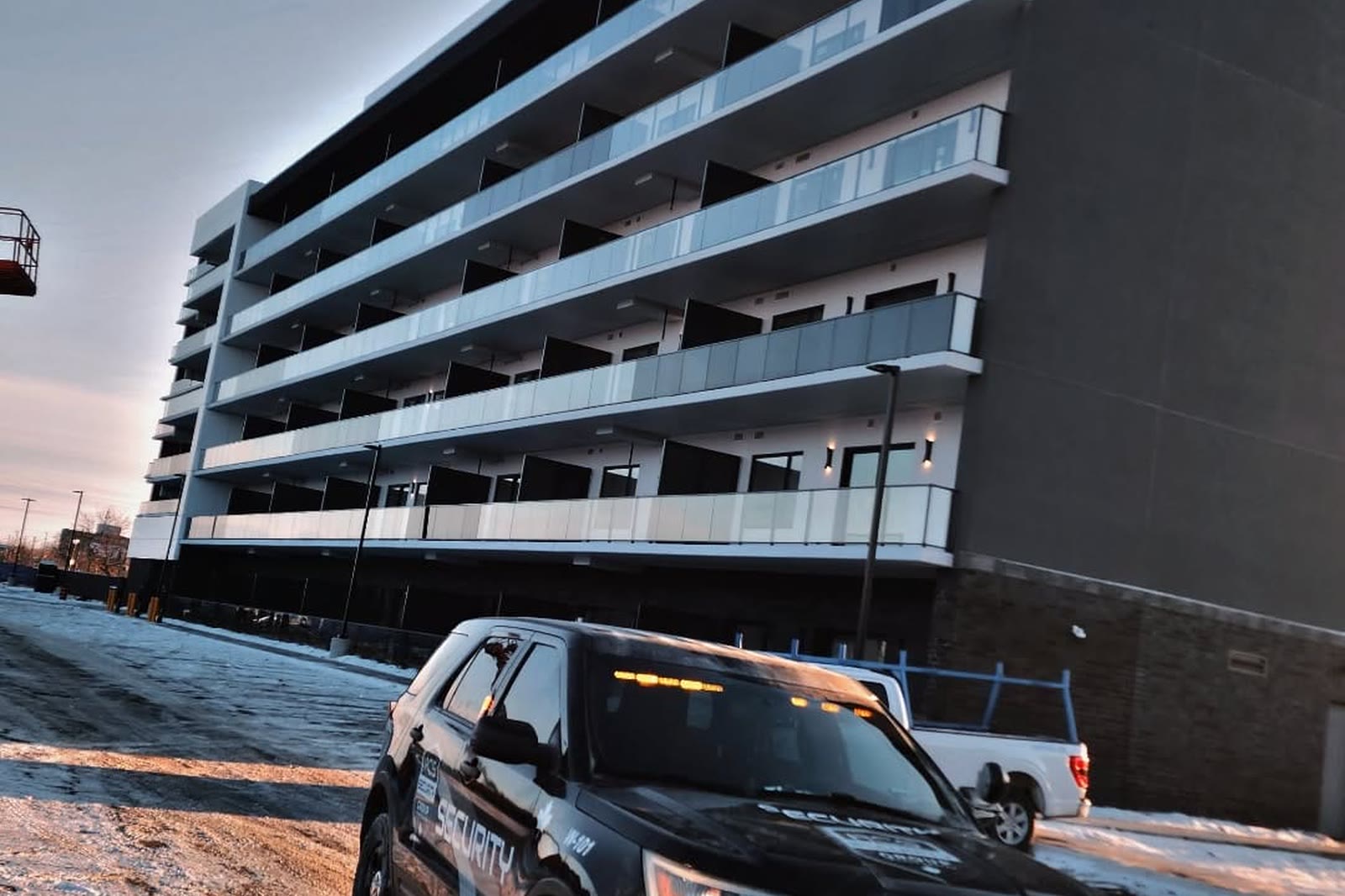
  • An ACS patrol vehicle parked in front of a parking structure
    Mobile patrol Corridors, lots and civic buildings

    A marked vehicle moving between sites on an unpredictable schedule. In a business improvement area it is the thing members actually notice between foot shifts.

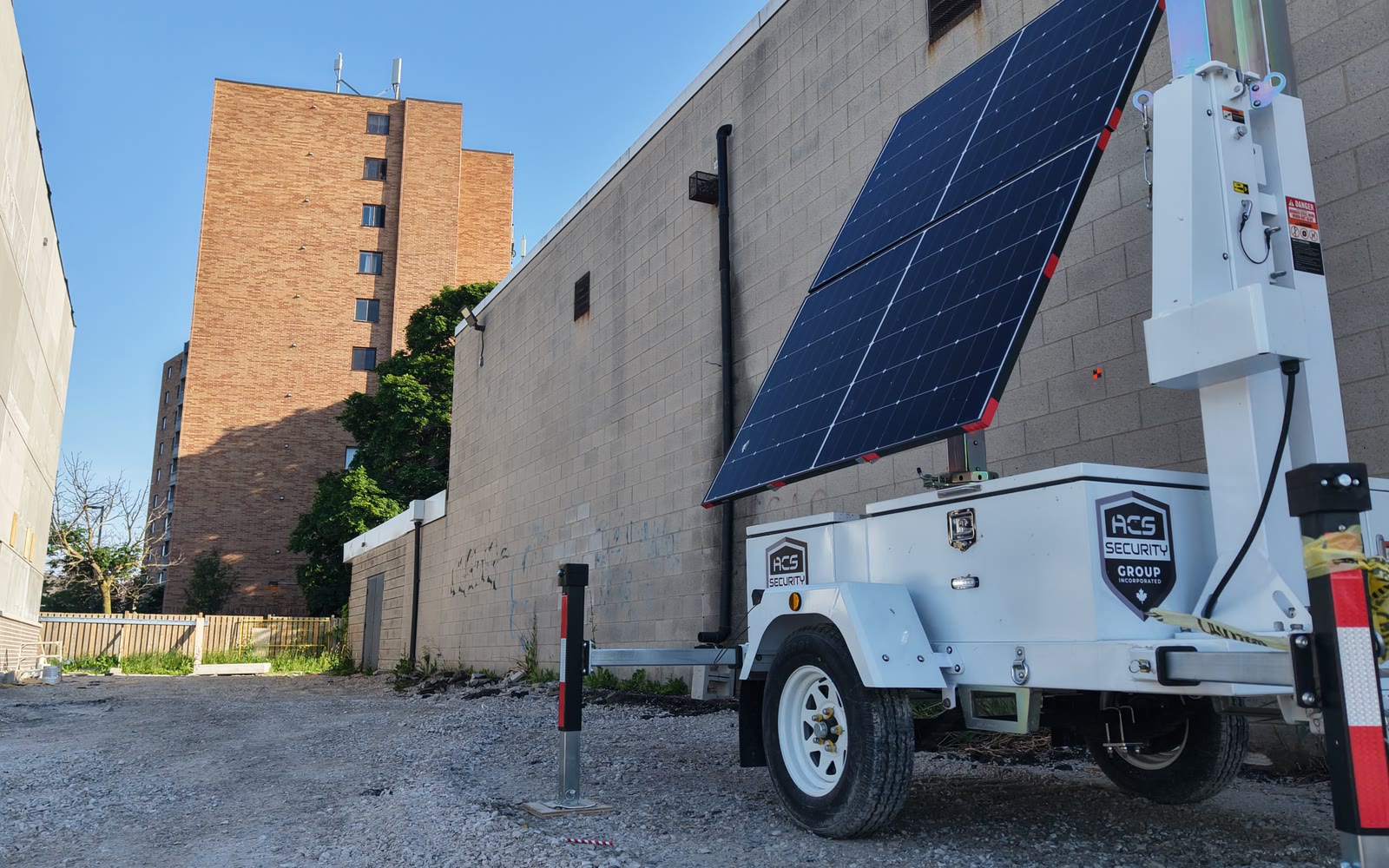
  • An ACS mobile tower parked beside a building
    Mobile tower Lots, laneways and problem corners

    Visible by design. It goes where the complaints are this season and moves when they move — without a capital project or a pole permit.

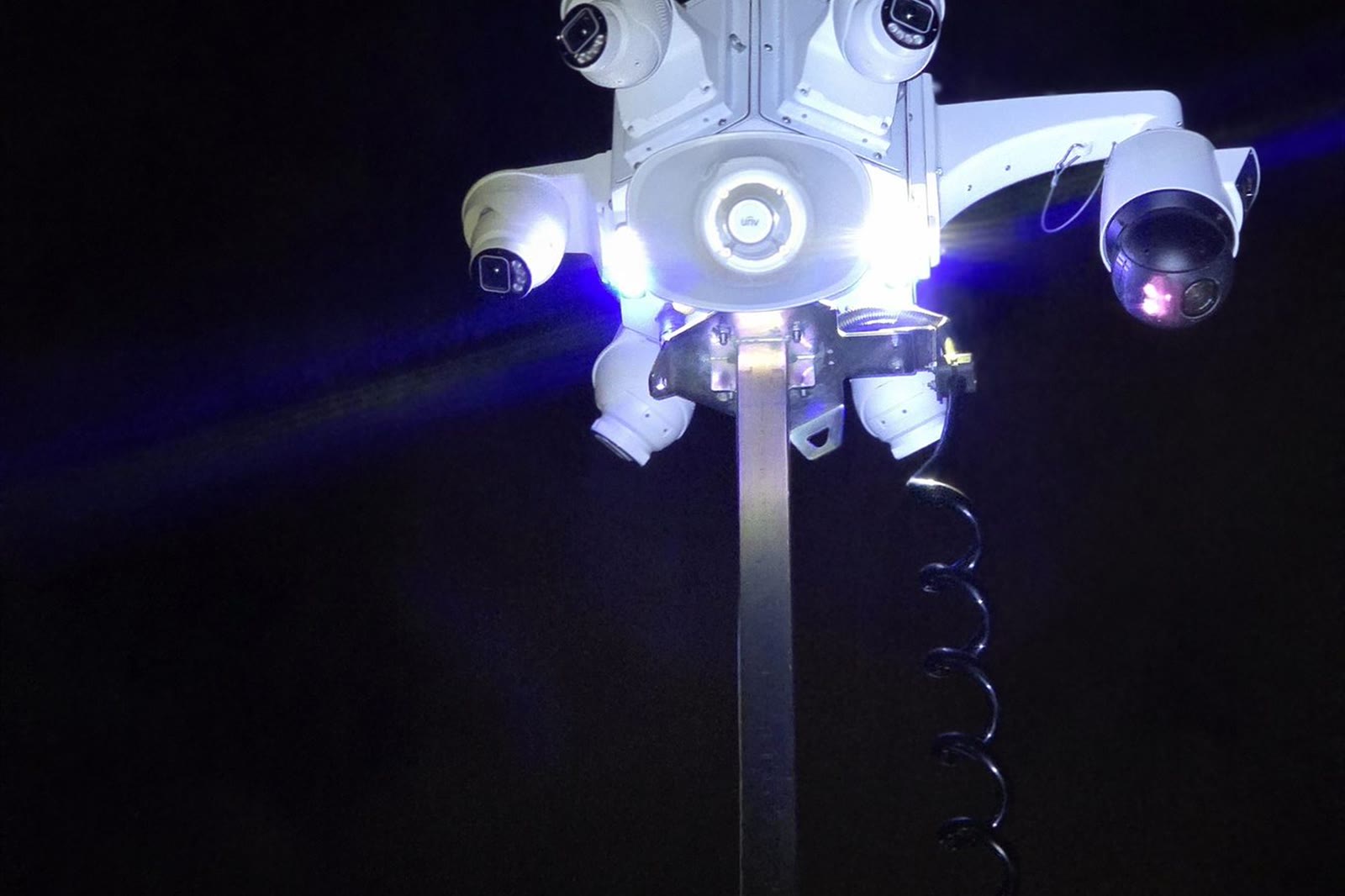
  • An ACS multi-camera head lit at night on top of a mast
    Camera cluster and lighting Top of the mast

    Lit, recorded and monitored. Lighting alone changes behaviour in a public space; lighting with someone watching changes it and produces a record.

Ask what a shift on your corridor would look like, and what the log would give the city.

(519) 800-3947
Proof

A shift, start to finish.

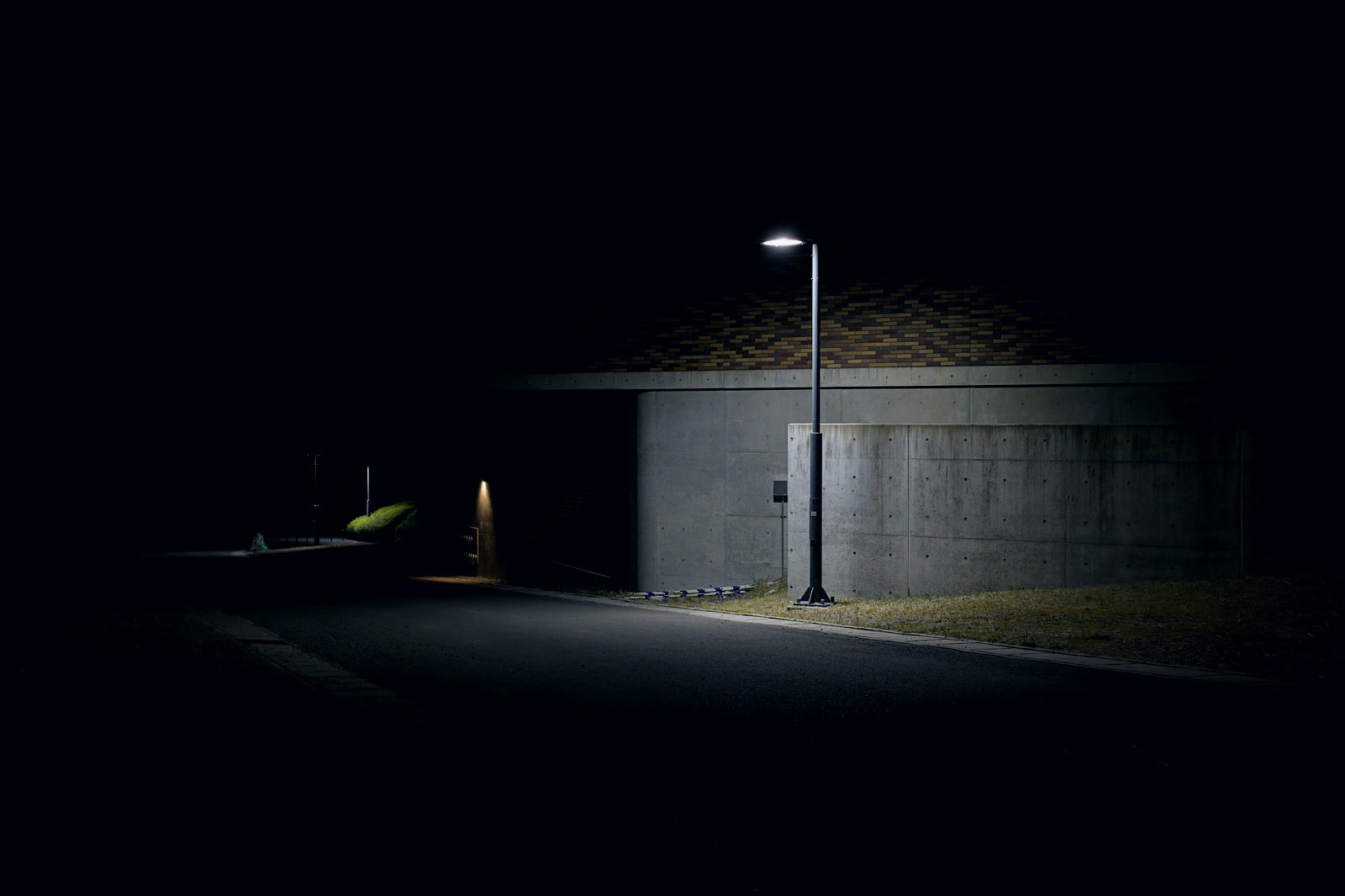
An empty road at night beside a concrete wall, one streetlight lit
Public-facing

High-traffic public space

Guards trained in de-escalation hold the ground. Towers and cameras extend the view, and live operators watch after hours. Incidents are documented every shift, so order is kept without confrontation and the record is clear.

See case studies from ACS deployments
FAQ

Common questions.

Yes. We assess the area first: the blocks, access points, foot-traffic patterns and risk windows. Then we deploy de-escalation-first guards, with towers, cameras and live monitoring layered in where they extend coverage.

With a respectful, public-facing presence. Our guards are trained in situational awareness and de-escalation. They control an environment without disruption, keeping order while the space stays open to the public.

Yes. After hours, towers and live virtual monitoring extend visibility across an open area around the clock. Guards and a clear escalation path back them up when something needs a response, and mobile patrols can add scheduled checks and alarm response.

Yes. Mobile defense towers are solar-powered with 5G wireless internet and need no permanent install. They cover a park, lot or event footprint and can be relocated as needs change.

Every guard is individually licensed under Ontario's PSISA and screened before representing ACS. Operations carry comprehensive general liability coverage.

Yes. Shifts are supervised and documented, and every incident is reported clearly, so the activity in a public space is on the record, not anecdotal.

Question not covered here? Call (519) 800-3947 and talk to the team that runs the coverage.

Let's secure
your corridor.

  1. Tell us about the siteSend the short form, or call (519) 800-3947.
  2. A coordinator follows upBy phone or email, to book your walkthrough.
  3. Your free assessmentLayout, access points, high-risk hours and the coverage that fits.