Results About Careers Contact Law Enforcement Video Request
Virtual Client Sign-in Guard Client Sign-in Request a Free Security Assessment (519) 800-3947
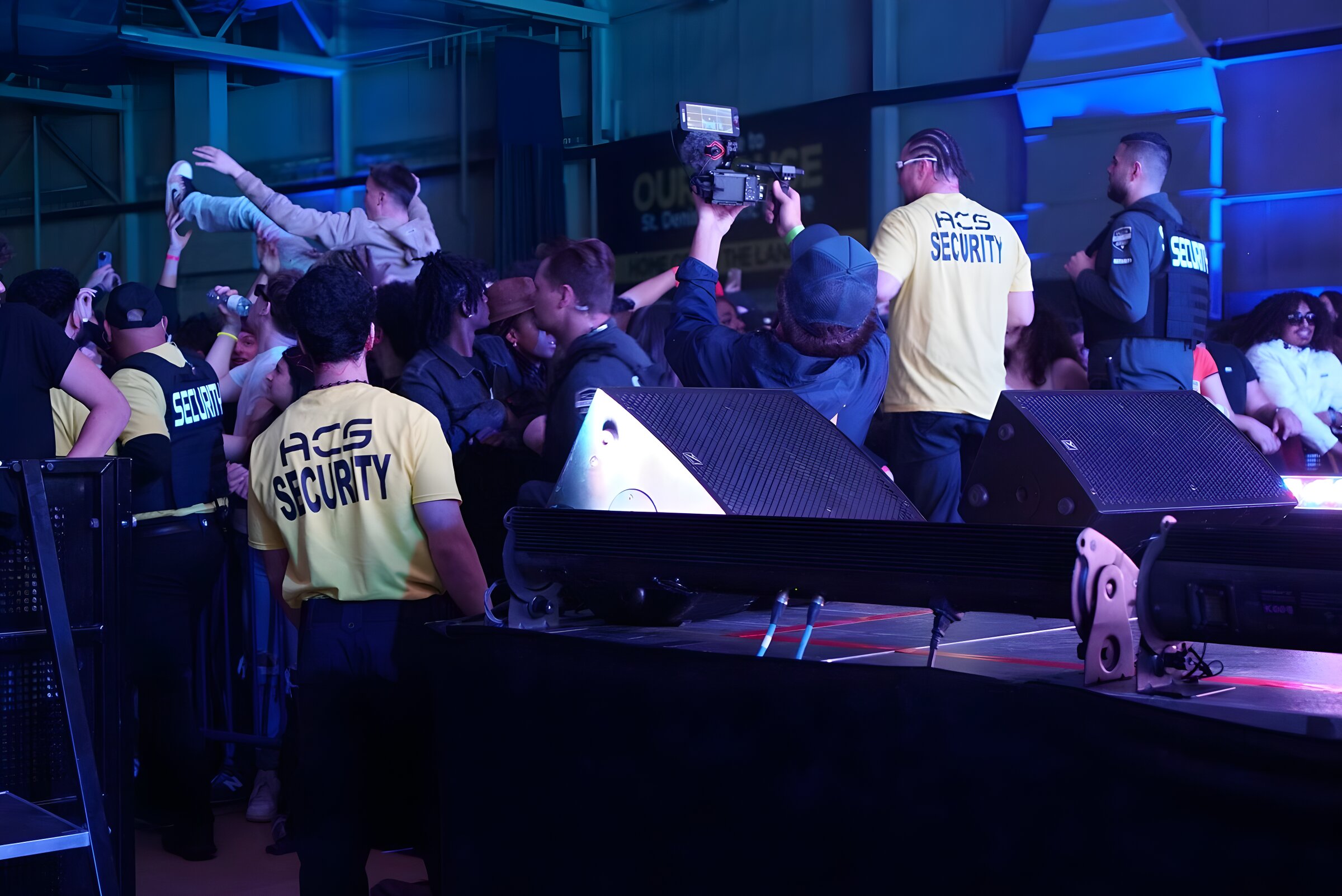
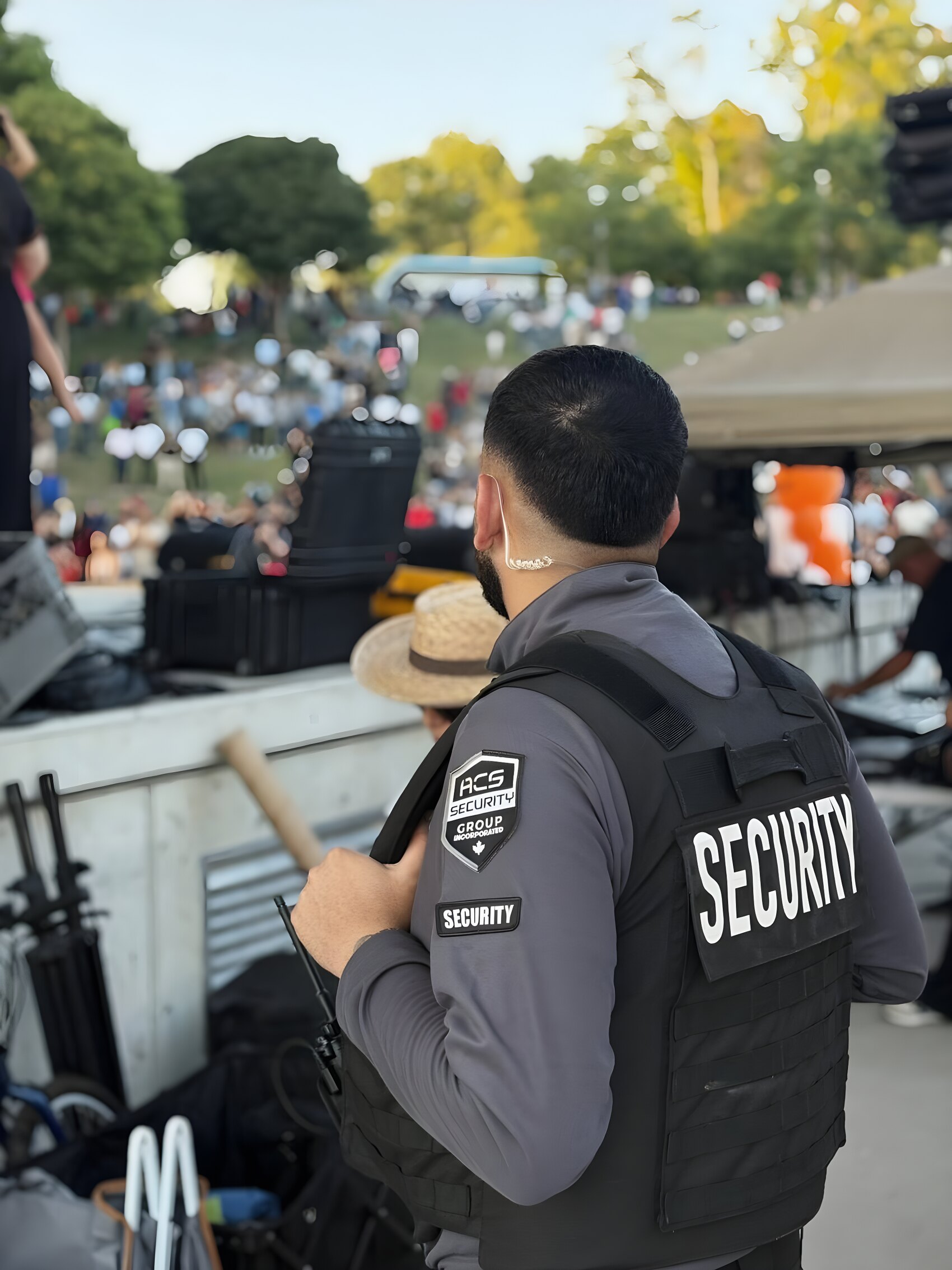
ACS officers working a barrier line in front of a crowd at an outdoor event
Event Security

Event security,
planned before the gates open.

Licensed officers for festivals, concerts, fairs and community events — staffed against your run of show, briefed on the site before the first guest arrives, and on one radio net with your team.

What the numbers say

The crowd is the risk.
Assault is what it produces.

Events do not create crime so much as concentrate people, and the offence that follows a concentration of people is assault. Canada counts how much of it there is. The United States also counts where it happened — including at the kind of venue an event is held in.

Canada · 2025

0

assault (level 1) incidents police recorded across Canada in 2025. The rate did not move on 2024 — this is the steady state, not a spike.

Statistics Canada · 2025

0in Ontario

of those were in Ontario. The police-reported count does not record what kind of place they happened in.

Statistics Canada · table 35-10-0177-01

United States · 2025

0

assault offences recorded at arenas, stadiums, fairgrounds and coliseums by NIBRS-reporting agencies in 2025.

FBI · NIBRS table 17

0

more at parks and playgrounds — the open ground most community events are actually held on.

FBI · NIBRS table 17

Canadian counts exactly as printed in table 5 of Statistics Canada's Police-reported crime statistics in Canada, 2025 (22 July 2026), where the change in the assault rate between 2024 and 2025 is printed as zero; the Ontario figure from table 35-10-0177-01, which is the only source that breaks the violation out by province. U.S. figures are offences, not incidents, from table 17 (Crimes Against Persons Offenses, Offense Category by Location, 2025) of the FBI's NIBRS tables, published August 2026 and downloaded from the Crime Data Explorer — the location categories are named there as “Arena/Stadium/Fairgrounds/Coliseum” and “Park/Playground”. NIBRS is not the whole country: 15,099 agencies covering 305,977,619 people submitted for 2025, against a national population of 341,784,857. Canada publishes no equivalent breakdown by location, which is why the venue figures here are American.

How it works

The plan is written
before anyone is posted.

Every venue is walked before a guard is assigned: access points, pinch points, blind spots and egress lanes. Posts are then placed against your run of show — not against a flat headcount that is wrong all day.

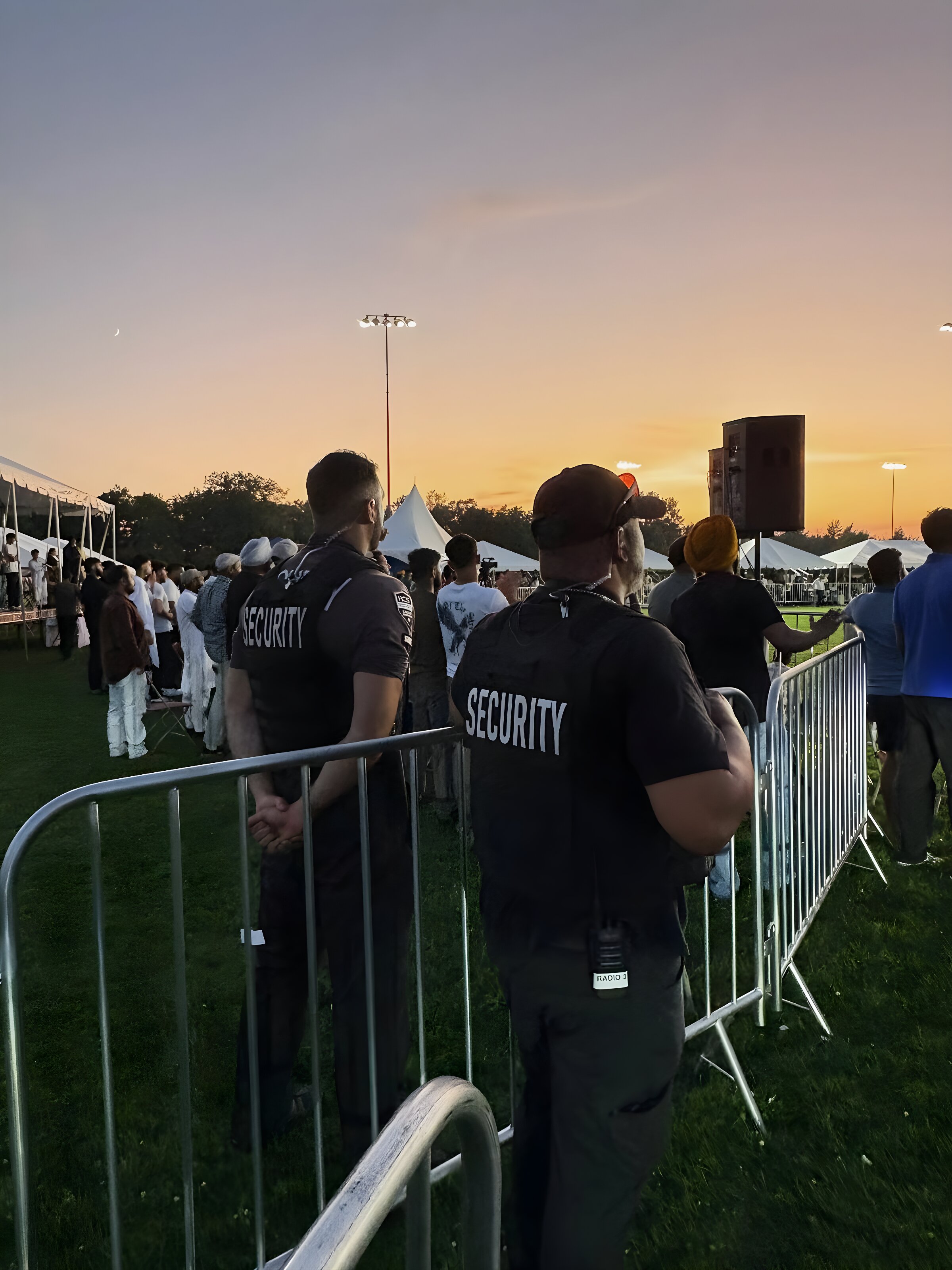
A line of ACS officers working a barrier at an outdoor event at sunset, the crowd behind them
Licensed officers · barrier and egress post
  1. Load-in

    The site before it is a venue

    Trucks, cash, cable and stock arrive while the fence is still going up. The first post of the day is the one nobody budgets for and everybody misses.

  2. Doors

    Entry, search and the queue outside it

    The queue is part of the event. Lanes are staffed so the line keeps moving — a bottleneck at the gate creates the crowd problem the gate was there to prevent.

  3. Peak

    Flow, not headcount

    Officers work the pinch points — bar ends, stage front, the route to the washrooms — because that is where a crowd stops moving and starts pressing.

  4. Egress

    Everyone leaving at once, on purpose

    The most dangerous ten minutes of an event are the ten after it ends. Exits are opened in a planned order and held open by staff who were briefed on that order.

  5. Load-out

    The site after the crowd

    Gear, float and stock go back onto trucks in the dark with the fence coming down. The last post of the day covers the same assets as the first.
Officers are licensed under the Private Security and Investigative Services Act. Staffing numbers, post positions and the egress plan are agreed with the organiser — and where required, with the municipality and fire service — before the site opens.

An event runs to a clock

Staffing that is written against a headcount
is staffing that is wrong all day.

Crowds do not build evenly and neither does risk. Every event has the same five beats, and the number of officers you need is different in each of them.

  1. Load-in

    A site, not yet a venue

    Trucks, stock, cash floats and cable arrive while the fence is half up and anyone can walk on.

    • Gate post from first delivery
    • Compound and cable runs covered
  2. Doors

    The queue is part of the event

    A slow search lane creates a crowd outside the fence — the exact problem the lane exists to prevent.

    • Lanes staffed to keep the line moving
    • Bag search and refusal handled at the gate
  3. Peak

    Flow, not numbers

    Bar ends, stage front and the route to the washrooms are where a crowd stops moving and starts pressing.

    • Officers on the pinch points
    • Radio net with the organiser
  4. Egress

    The most dangerous ten minutes

    Everyone leaves at once. Exits opened in the wrong order, or held shut, is how an event makes the news.

    • Exits opened in a planned order
    • Staff briefed on that order, not improvising
  5. Load-out

    The same assets, in the dark

    Gear and takings go back onto trucks with the fence coming down and the crowd gone.

    • Compound held until the last truck
    • Handover and incident log to the organiser
What you get

What each part of the
plan is there to do.

Gates, barriers and egress

Security Guard Services

Licensed officers on entry, search lanes, pinch points and the exits, supervised on site and briefed on the plan before doors.

Compound, load-in and load-out

Mobile Defense Towers

Height over a field with no power and nothing to mount to, covering gear and stock through the hours either side of the event.

Overnight between event days

Virtual Security Guard

Operators watching the site live once the crowd and the staff have gone, speaking to anyone who comes back onto it.

Perimeter and car parks

Mobile Patrol & Alarm Response

A marked vehicle covering the ground a foot post cannot — overflow parking, the far fence, and the routes guests walk back to their cars.

Most events start with officers and add the rest where the site asks for it. The assessment says which — see what an assessment covers

The equipment

What is staffed, and what is deployed.

An event needs people first. Equipment covers the hours when the crowd is gone and the assets are not.

  • An ACS officer on post at a daytime outdoor event, the crowd behind them
    Licensed officers Gates, pinch points and egress

    Posted against the run of show rather than a flat headcount, briefed on the site before the first guest arrives, and on one radio net with the organiser.

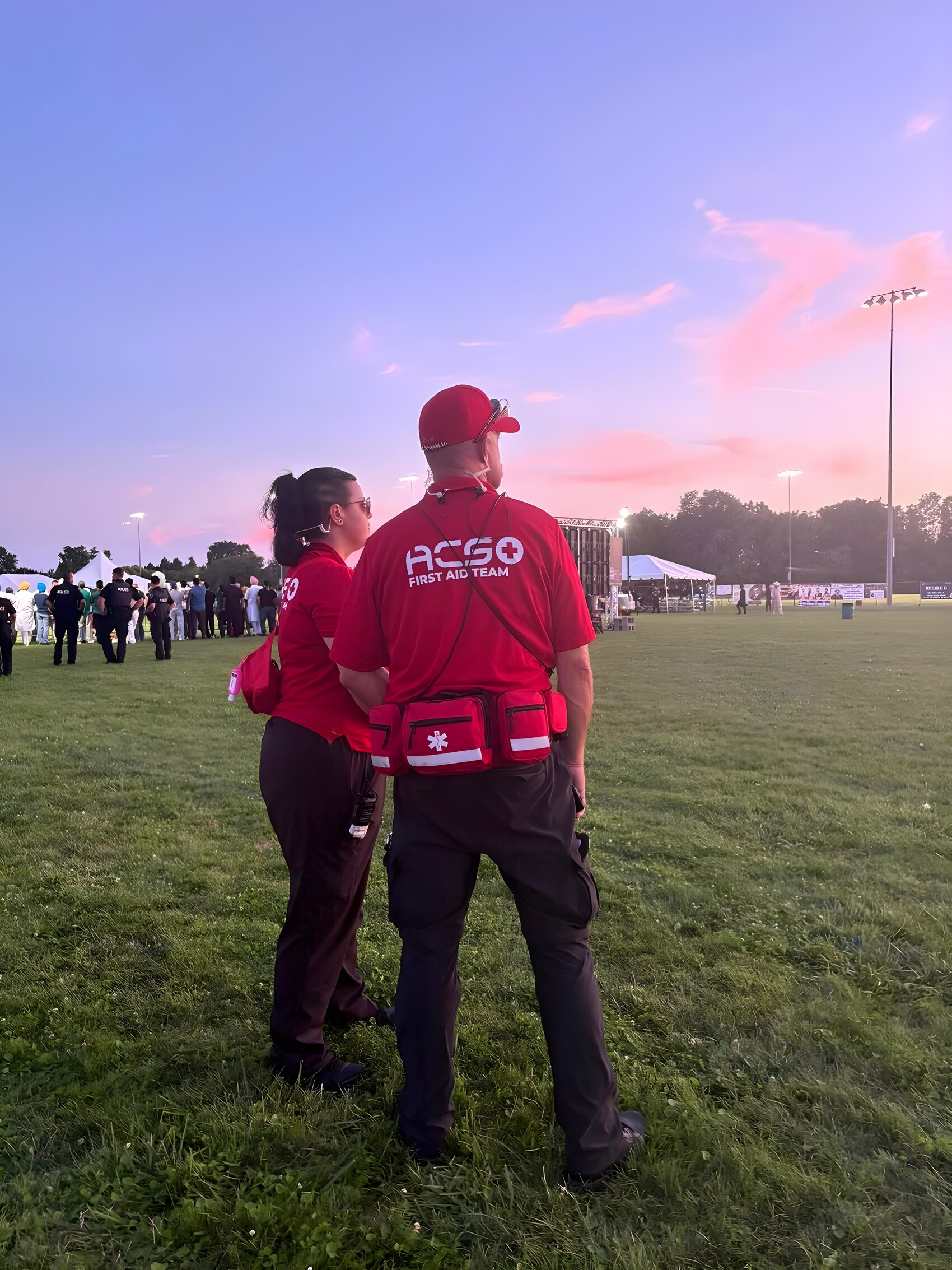
  • The ACS first aid team in red at an outdoor event at sunset
    First aid readiness On site, for the duration

    Most of what actually happens at an event is medical, not criminal. Trained first aid on site means the organiser is not relying on a 911 call and a car park somebody has to guide an ambulance through.

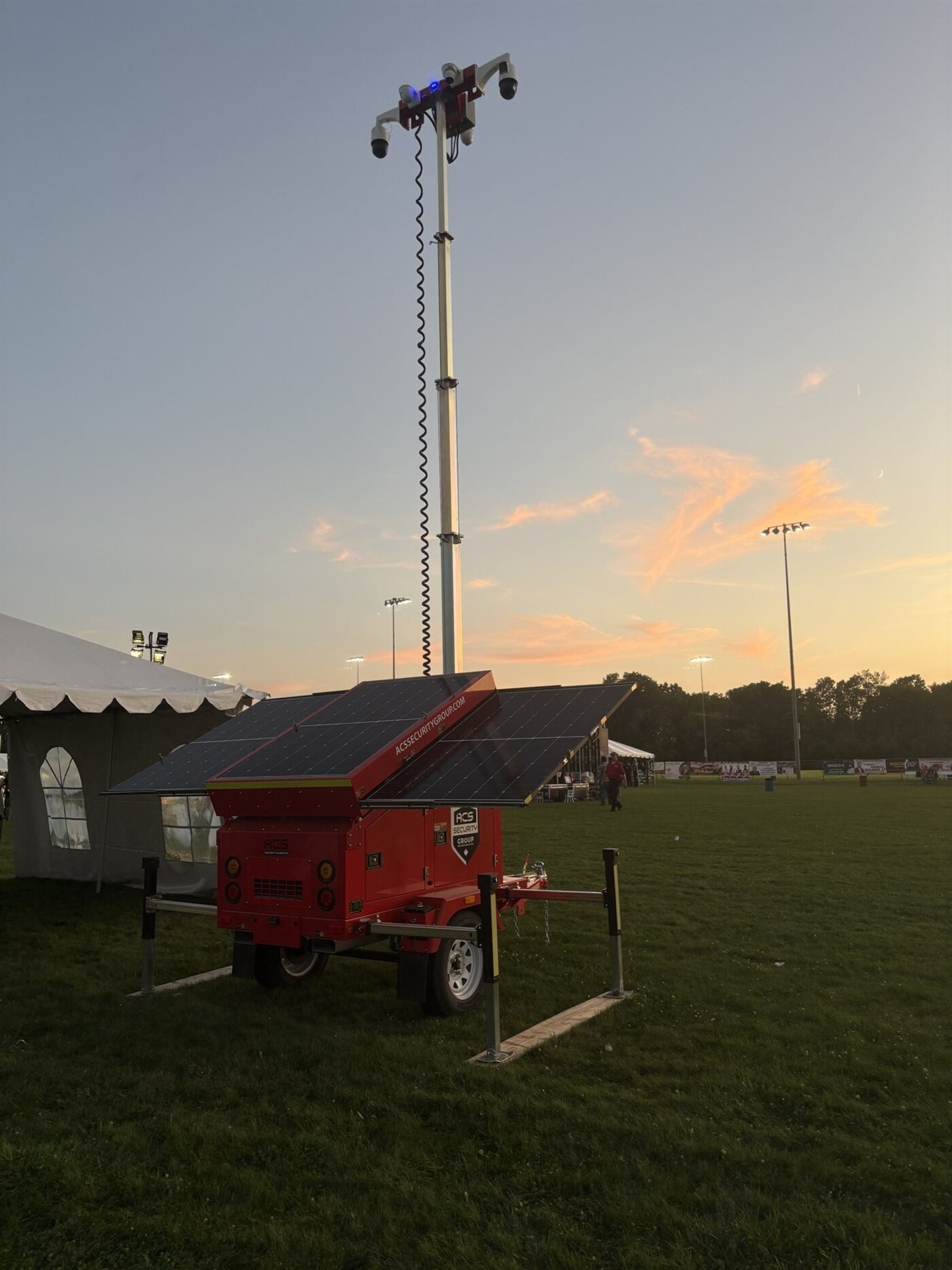
  • An ACS mobile tower raised on an event field at sunset
    Mobile tower Compound, load-in and load-out

    Covers the gear, the float and the cable runs through the hours either side of the event — the ones with no crowd, no staff and everything still on site.

Have a date and a site? Ask what the run of show means for staffing.

(519) 800-3947
Proof

A season, not a single night.

A recurring public event program run across a season, with the same posts, the same briefing format and the same report after every date — read it in full on our results

FAQ

Common questions.

As early as the venue is confirmed. Site walks, staffing plans and briefings take time. Last-minute coverage skips the planning that keeps events calm.

Yes. Every guard is individually licensed under Ontario's PSISA, vetted and briefed on your specific event before arrival.

Yes. Service zones get planned posts and de-escalation-first personnel, with incident handling agreed and documented before the event.

Yes. Overnight site and asset protection by guard, tower or virtual oversight, matched to the venue and what stays on the grounds.

We map emergency access into the plan and act as on-site liaison where required, with every incident documented.

A debrief with incident documentation: what happened, how it was handled and what we would adjust for the next run.

Question not covered here? Call (519) 800-3947 and talk to the team that runs the coverage.

Let's secure
your event.

  1. Tell us about the siteSend the short form, or call (519) 800-3947.
  2. A coordinator follows upBy phone or email, to book your walkthrough.
  3. Your free assessmentLayout, access points, high-risk hours and the coverage that fits.