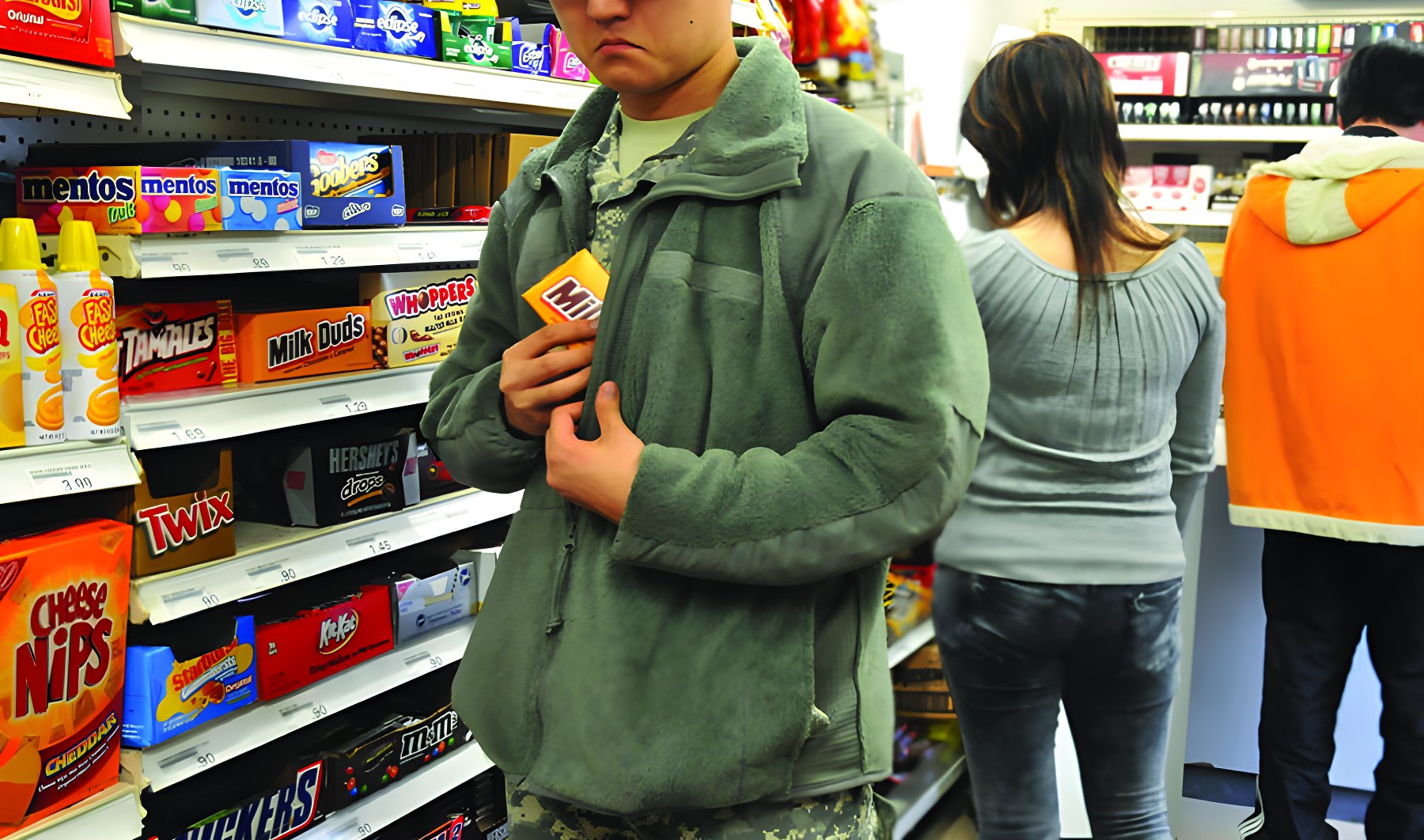
Stop the loss
before it leaves the store.
ACS pairs trained floor presence with AI cameras over your highest-risk zones and after-hours live monitoring, so shoplifting, staff theft and refund fraud get caught in the moment, not counted at inventory.
Small losses.
Big line item.
Shrink never happens all at once, so it rarely feels like a loss. Set your annual revenue and the shrink rate from your last inventory count to see what it adds up to.
An estimate from the two figures you set. Your actual exposure depends on category, layout and current controls. That is what the assessment measures.
See the plan for my storeLoss has more than
one source.
Shoplifting
Concealment, grab-and-run and organized retail crime on the floor.
Internal & staff theft
Product, cash and sweethearting from behind the counter.
Fitting rooms & blind spots
The corners where product quietly goes to disappear.
POS & refund fraud
Voided sales, false returns and till manipulation.
After-hours break-ins
Smash-and-grab and forced entry once the doors are locked.
Entrances & parking lot
Cart pushouts, exit-door theft and lot incidents.
One goal.
Three ways to staff it.
Every store's risk, layout and footprint are different. Loss prevention comes in three models. Pick the one that fits, or layer them.
Uniformed loss prevention
A licensed officer, visible at the door and on the floor. Deterrence starts before anything is taken. When theft or fraud does happen, a trained professional is already on site to handle it to your policy: intervention, documentation and police handover. The uniform changes behaviour the moment someone walks in.
Security guard servicesPlainclothes loss prevention
Officers who read as shoppers. They watch selection, concealment and the last point of payment. ACS practice is to keep a person in continuous observation before any arrest under s. 494. The right fit where visible security only moves theft to another aisle, or where repeat offenders have learned the rotation.
Virtual loss prevention
A trained team of virtual LP agents watching your in-store cameras in real time, across every location you operate. Agents can issue a live audio talk-down directly to a person concealing merchandise, or quietly alert on-site staff and security to intervene. One team covering many stores means multi-location retailers get full-time LP coverage without full-time staffing at every site.
LICENSED UNDER ONTARIO PSISA · INSURED · HANDLED TO YOUR WRITTEN POLICY
Not sure which model fits? That is the first question the free assessment answers.
When a store is bleeding,
send the Blitz team.
Some locations do not need a program adjustment. They need an intervention. The ACS Strategic Blitz Team is a coordinated unit of experienced LP officers deployed short-term into high-theft stores to break the pattern, then hand back a store that is no longer a soft target.
Read the store's own losses
We start with your incident data and camera history. Peak loss windows, hot zones, known faces. The deployment is built around when and where your store actually loses.
Saturate the windows that matter
A mixed team, uniformed and plainclothes, working together with virtual monitoring, covers the store during the windows that matter. Crews casing the store meet coverage they cannot map.
Take the store off the easy list
Apprehensions, trespass notices, and offender identification in volume. Organized retail crime runs on intelligence. A Blitz deployment takes your store off the list of easy targets.
Results that outlast the team
You get a full intelligence package. Who was hitting the store, when, how, and the ranked fixes that keep losses down after the team rotates out. The Blitz ends. The results do not.
Built for stores dealing with ORC crews, habitual offenders, or shrink numbers that jumped and stayed there.
Request a Blitz assessmentThe theft that does not
come through the door.
Most staff are honest. But an outsider has to find your gaps, and an employee already knows them. Which camera faces away. Which count gets skipped. Which refunds nobody reviews. Internal loss runs quiet, repeats and hides inside your own paperwork. That is why it needs a different response than floor coverage.
Internal-loss review
When the numbers point inward, we work with you on a discreet, structured review of where the loss is coming from, documented and handled fairly, whether the outcome is an internal decision, a police handover, or clearing someone who did nothing wrong.
POS and exception review
Voids, no-sales, manual discounts, and refund patterns tell the story the register tape will not. We review your exception data for the outliers worth a closer look, and separate real loss from honest error.
Store security audit
A full walkthrough of the controls and habits that internal loss lives in, covered in detail below.
Handled quietly, fairly and properly, so your team keeps its trust while the loss is dealt with.
Audit the store
before someone else does.
A structured, top-to-bottom review of how your store actually handles loss, not how the manual says it does. Shoplifters, crews, and dishonest staff all audit your store constantly. This puts you ahead of them.
Entrance, exit and floor sightlines
Camera coverage map and blind spots
Receiving, stockroom and vendor delivery process
POS exception and refund controls
Cash handling and deposit procedures
Staff awareness and escalation procedures
You get a written report ranking each gap by loss exposure, with fixes ordered by cost: the free ones first.
Book a security auditWhat our officers can do,
and what they will not.
What a loss prevention officer is legally allowed to do is rarely explained in plain language. We would rather you know the rules before you hire anyone, including us.
Arrest authority
A person authorized by the property owner may arrest someone found committing a criminal offence on or in relation to that property, and must hand that person to police promptly. ACS practice adds continuous observation before any arrest and reasonable force only. Done properly, it protects your store. Done improperly, it becomes your lawsuit. Our officers are trained on all of it.
Removal and banning
As your authorized agent, our officers can direct individuals to leave, issue trespass notices banning repeat offenders, and act when a banned individual returns. For retail, this is often the most useful tool there is. It addresses the habitual offender before anything is stolen.
Licensed and insured
Every ACS officer is licensed under Ontario's Private Security and Investigative Services Act, trained in use-of-force limits, de-escalation, and evidence handling, and covered by comprehensive general liability. No unlicensed guards. No exceptions.
What we will not do
No searches without consent. No detaining on suspicion alone. No force beyond what the law allows. Restraint is not a limitation. It is what keeps a good stop from becoming a bad claim.
This page is general information about security services in Ontario, not legal advice.
Cameras that detect,
not just record.
Stores running our preferred camera line get more than footage. Modern 4K systems with on-board AI flag the behaviour, and the video quality holds up as evidence when it matters most.
4K evidence-grade video
Faces, hands and product stay identifiable: footage that supports a charge instead of a shrug.
AI detection, human decision
Loitering, concealment zones and after-hours intrusion flagged automatically and routed to trained virtual LP agents. AI finds it. A person judges it.
Crime data and site history
Incidents logged, tagged and searchable. Over time your store builds its own intelligence file: repeat offenders, peak-loss windows, hot zones.
One investment, three jobs
The same camera system powers live detection, evidence collection and virtual LP coverage. NDAA-compliant hardware, no hidden software fees.
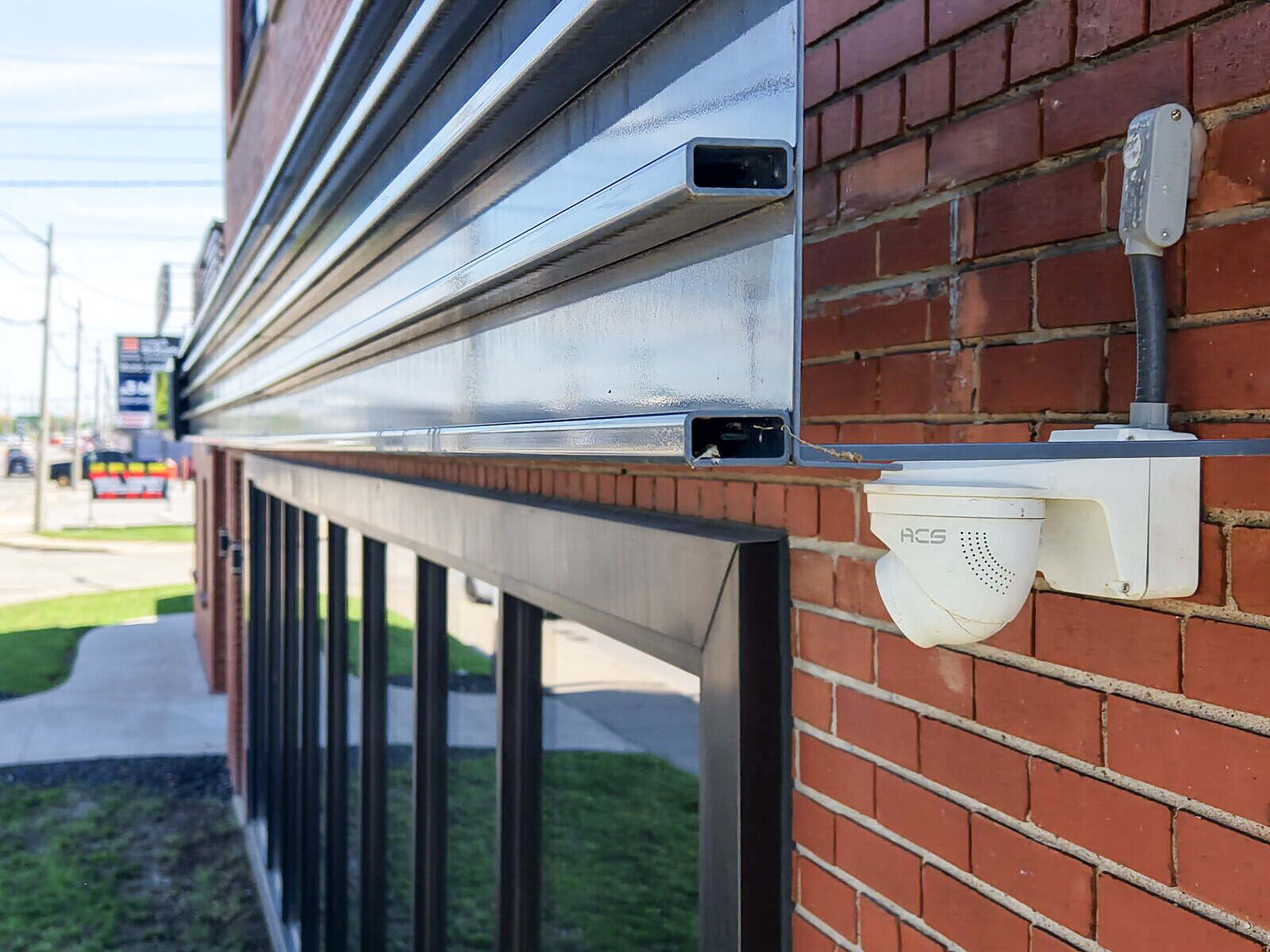 REC · MONITORED
Already have cameras? The audit maps your current coverage and tells you what is usable before recommending anything new.
Live operators keep
watch after close.
Live monitoring
Trained operators watch the store overnight, not a recording nobody sees.
Verified alarms
Alarms confirmed on camera before anyone is dispatched.
Voice-down & escalation
Operators speak on site to move intruders along, then call the right response.
Common questions.
Both. Uniformed presence deters openly. Plainclothes observation catches what hides from a uniform. The mix is set to your store, your product and your risk hours.
Yes. Every officer is licensed under the Ontario PSISA, screened and trained, and ACS is insured.
Usually. The assessment maps what integrates and what needs upgrading. You change what fails the plan, not the whole system.
De-escalation comes first. Officers act strictly to your store's policy and the law, and document the incident in full for police or your insurer. The scope of any intervention is agreed with you in advance.
Camera coverage over tills and back-of-house, paired with a searchable event log, makes voided sales, false returns and staff theft reviewable with footage attached.
Yes. After-hours live monitoring watches the store overnight, verifies alarms on camera, and can speak on site and escalate.
Yes, under specific conditions. Section 494 of the Criminal Code allows a person authorized by the property owner to arrest someone found committing a criminal offence on or in relation to that property, and the person must be handed to police promptly. ACS officers act only on an offence they have observed, keep continuous observation and use reasonable force only. Detaining on suspicion alone is not lawful.
The pattern usually tells. Loss concentrated in categories only staff handle, shrink during low-traffic hours, or anomalies in voids and refunds point inward. Loss in high-theft categories during peak hours points to the floor. A security audit separates the two, and many stores have some of both.
A short-term, high-intensity deployment of uniformed and plainclothes officers into a store with a serious theft problem. It is targeted using the store's own incident data, coordinated with virtual monitoring and finished with an intelligence handoff, so results outlast the deployment.
Theft is one cause of shrink. Shrink is the total gap between the inventory you should have and the inventory you actually have: shoplifting, staff theft, vendor fraud, damage and administrative error combined. That is why a real program looks at more than the front door.
Question not covered here? Call (519) 800-3947 and talk to the team that runs the coverage.